What's A State of Emergency Anyway?

Reblogged from TexTheLaw:

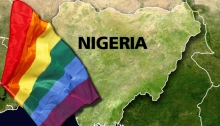
On the 15th of May 2013, President Goodluck Jonathan declared a State of Emergency in 3 states in the northern region of Nigeria. Apart from the debate on the propriety or otherwise of the declaration (or “proclamation” as the constitution calls it), a lot of debate has also been had on whether or not a state of emergency can be declared with the Governors of the affected states remaining in office.

Read more… 1,103 more words

The State of Emergency declared by President  Goodluck Jonathan has, as expected, stirred up an interesting debate. TextheLaw gives a primer on what the State of Emergency decree is in the first place.

Boko Haram have torn my English Reader

Reblogged from sirwebs:

Click to visit the original post

Back in Primary School - in the late 1980’s - we had this wonderful, nationalistic English Reader (can’t remember the title now), where a family takes a holiday road trip across Nigeria, starting off somewhere in the South and touching the northernmost parts of Borno and Kano. Back then, most Schools studied English with the legendary Macmillan Reader starring Edet, Simbi and co.

Read more… 485 more words

Bring Back the Book: Peers of an Expired Empire

Reblogged from FEATHERS PROJECT:

By Nwachukwu Egbunike 

In Nigeria, you must capture the essence of your being by the number of titles you been able to acquire over the years. “Former special assistant, formerly choir master, etc” expresses the clout of the bearer. And such is the current ruforufo fight between two former public servants of the Federal Republic. To think that they are throwing arrows at each other just because of an ordinary book, haba!

Read more… 448 more words

Ousting the PDP? A Reality Check

It is still two years to the elections of 2015 but the topic dominates news and conversation in Nigeria. With the announcement of the creation of the African People’s Congress in February -as a result of a merger of the major opposition political parties- there seems to be, among the political activists in the opposition, and people who are simply fed up with the current state of Nigerian affairs, a sense of expectation and confidence that the political juggernaut that is the People’s Democratic Party (PDP) will finally be overcome come 2015 and the nation will automatically enter the promised land.

That a new political set-up will automatically and immediately usher the change we all desire is at best a pipe dream which unfortunately has a strong hold on many including, unfortunately the leaders and mouthpieces of the opposition especially on the social media scape. The cast iron certainty, however, that this coalition of parties will oust the PDP in 2015 has an even much stronger hold on many in the opposition and is grounded on a similar illusion and ignorance of the facts on ground. The reality still remains that toppling the PDP will not be easy task and achieving it will require more than just rhetoric and hot air blown to a section of Nigerians.

There are many reasons for this; and many of the sceptics and even the members of the PDP take pains to point them out. One of them is that the PDP has a very wide spread nationwide; a spread that reaches down to corners of the country beneath the RADAR of many of the self-anointed spokespersons of the opposition.

I am not a politician but a Geologist and my work routinely takes me to remote parts of the country where the realities and the worries of the people are in stark contrast to that of the typical urbanite. In 2010 a year before the last general election my work took me to the village of Wanakom and its environs in the north-western corner of Cross River state. This is part of the remote region of the south east that covers northern Ebonyi state, Southern Benue state and north-western Cross River state. We came there from Benue state in the north through a rough dirt road with wooden bridges.  New electric poles signified that the dividends of rural electrification scheme (and also being a part of an oil producing state) had just reached the village. None of the mobile Telecom companies had extended services to the area at the time even though by stroke of luck one may get stray network service by climbing a tree or a hill.

The first thing when visiting areas like this for work is to contact the village head in order to inform them of one’s mission. Our meeting with the village head was a bit surprising as he decided to summon all the Chiefs and elders including one young man whom they seemed to show a lot of respect. After a panel like meeting with the elders this young man cornered us and told us to disregard all that the elders had told us and to let him ‘take care of us’. This young man was the PDP representative for that area. He organized a local who would take us to the various rock exposures and took us to the house of the father of the local government chairman where we lodge. He said he would have loved to accompany us but he had to be in Calabar the next day (probably to collect money and receive instructions). In the adjoining more remote villages we visited the man was well known.  We did not meet a single representative of the opposition. No sign that there was another political party apart from the PDP in the area. That was a year before the general elections.

I can give similar anecdotes from a lot of places in the south- east and parts of the middle belt where I have worked. The realities of these people there are more modest than ours. They don’t know or care about the latest on social media. They also aren’t asking for too much. If the PDP man can get them a few bags of fertilizer for their farms, grade their road, and share some money to the elders he has done enough to secure those areas.

This is the most important task for the opposition as 2015 approaches still remains reaching and winning the hearts of the common man in those remote villages and places where PDP is already entrenched. A lot can be achieved on Twitter and Facebook, but the social media demographic in Nigeria is still a small minority, majority of whom, by the look of things, may be too lazy to register and vote when the time comes.

The race has started and PDP is already far ahead. There are 2 years left to catch up. 

Curiosity’s First Drill Hole

Mars Panorama – Curiosity rover: Martian solar day 177 in New Mexico

Above is a self portrait by Curiosity after drilling a 1.6centimeter in diameter and 6.4 centimenter deep hole on a patch of martian outcrop called John Klien.

This feat marks another milestone for Curiosity and in execution was one of the most complex for handlers on Earth.

While Curiosity executed the first rock drilling on Mars, this isn’t the first time this is done on bodies outside the Earth. The Apollo astronauts collected lunar samples for Earth using hand-held battery powered drills. The Soviets have also deployed spacecraft that drilled into the lunar surface to collect rocks and also used robotic drills on missions to Venus.

What Happened to Today’s Discourse

One of the distinctive marks of the ancient Greek civilization was its openness to reasoned discourse in the continuous search for truth symbolized by the Aeropagus: a place where ideas no matter how novel or esoteric could be entertained, analysed and critiqued; whether it be from Socrates or St. Paul. This openness to discourse remains a mark of societies who pride themselves as enlightened.
Judging from the manner in which the recent exchanges between the government spokespersons and prominent critics and the level of abrasiveness, vulgarity and egotism displayed on both sides one is forced to wonder whether we have forgotten or rather cast aside the idea of true discourse and settled for a brawl.

It must first be admitted that corruption in Nigeria, especially in government circles, still remains a cause for justified outrage. Corruption is a problem which in reality is more profound and the solutions more fundamental than we most times would like to think it is. It is only through true discourse that public anger will be properly channelled towards finding positive solutions. That public anger, unfortunately, has been dissipated (unfortunately by those in the forefront of public discourse) in point fingers and blaming the persons in power. These persons in power rather examine their conscience ridicule the motive of their critics. In the print media it is complaints without prescription. On social media where the limit on the number of characters seems to be equivalent to a limit on the depth of reflection, public discourse has descended into vulgarity and hooliganism. The bottom line is after all the hot air no one proposes solutions, no one even properly gets to understand the problem as the right questions are not asked. We remain rooted to the same spot not moving forward.

It seems timely, in the light of the flavour of current public discourse in Nigeria to call to mind again some qualities of matured and civilized public discourse. The first principle is that there is an element of truth in even the most erroneous point of view. The aim of any discourse is to attain the truth. The realization that our opponent’s view, no matter how mistaken, has a little bit of truth in it, is an important quality of a reasoned discourse. We must be willing to understand the other viewpoint in order to engage. The great philosopher and theologian Thomas Aquinas, when refuting erroneous ideas, always stated those ‘objections’ first. The remarkable thing was that he explained the other point of view even better than its advocates could before going ahead to systematically refute them. It is usual in our public debate these days for both sides to totally disregard any opposing viewpoint, sometimes haughtily, pigheadedly and impolitely.

The second point is that an ad Hominem attack is not an argument. An important mark of a civil discussion is that emphasis is placed on the propositions brought forward and not on the person who makes them. What we commonly find into the Nigerian public discourse is a tendency to easily resort to attacks on the person whose view differs from ours. We have government spokes persons calling critics ‘yesterday’s men’ or ‘evil stepmothers’ and those who as much as try to defend the government are labelled bootlickers,’voltrons’ or ‘learners’. Rather focus on what the person has said we tend to ask after his religion, tribe, or the company he worked for and then conclude that his arguments are irrelevant as his true motives are concealed. Most of the time we are so caught up in the mud-slinging that we don’t remember what the issue is in the first place. Personal grouses should be kept out of the public square and issues have to be faced squarely.

A third and easily forgotten point is that the truth is not determined by the majority. No matter how many people agree with a certain point of view it does not in any way determine its veracity. The aim of public discourse therefore is not to simply bring more people to our side but that a true understanding is reached by everyone. Our public debates –especially on social media forums – are sadly marked by the prevailing idea that the more ‘followers’ I am the more correct I am. Rather than our retweets not being endorsements, as many claim they aren’t, they become a means of showing just how many people endorse our point of view.

Reclaiming the meaning of true discourse in the Nigerian public square is a matter of urgency. The issues will not go away. Answers must be given and we cannot afford to waste our energies on irrelevant personal feuds. Being a part of an enlightened minority who shape public debate demands a sense responsibility and maturity.

In and Around the Rift: Nigeria at Night

The National Aeronautical and Space Agency (NASA) unveiled images of the Earth as it looks at night during the ongoing American Geophysical Union (AGU) fall meeting in San Fransisco, USA. The images are from the  new NASA and National Oceanic and Atmospheric Administration (NOAA)  Suomi NPP satellite and are a composite of cloud free images acquired throughout the year using the day-night band of its Visible Infrared Imaging Radiometer Suite (VIIRS).

dnb_land_ocean_ice.2012.3600x1800

Looking at high-resolution imagery of the globe the first striking thing is the apparent Island of Darkness surrounded by light that is Africa. Unlike Europe and Asia with bright spots of human lighting most of Africa is dark, except for South Africa, the Nile Delta in Egypt and South eastern Nigeria (to be precise the Niger Delta).

Nigeria at Night


Taking a close look at the country itself on can easily point out bright spots corresponding to Lagos and Abuja at night (Generators possibly) and the very bright spots in the Niger Delta (some offshore) are actually gas flares from the many oil wells in the area. A stark visible reminder of the economic and environmental cost of flaring which in spite of all the hot air from the government is still continuing.

In and Around the Rift: Faults on the Nsukka Formation

ikpuankwu

Overview of the Ikpuankwu quarry section (photo taken at the entrance). The fault is to the left. 

The Anambra basin is known to be faulted in many places but coming across outcrop size examples for the purpose of teaching is rare. This outcrop is a must visit for any trip around the Anambra basin.

The photo is from a large outcrop exposure, the Ikpankwu sand quarry located just off the Enugu-Port Hacourt express way at Ihube (approaching Okigwe).

The outcrop is composed of bluish grey shales (at the bottom) passing to sandstones interbedded with mudstones and siltstones.

Notice the listric (curved) fault geometry, rotation of the units on the hanging wall (downthrown) block and the dragging and smearing of the clay units on the fault plane.

Also apart from the cliff exposure we see an extension of the fault plane marked by the jutxaposition of dark shales and sanstones with a thick band of ferruginized and sheared mudstone which marks the fault plane.

Anecdotes from the Exam Hall #2

Prayer before Cheating?

Just before the Use of English exam (GS 101) which I invigilated the first years, a student asked for permission for the class to pray. After the singing and the praying (and the casting and binding) I told them that the fact that they have prayed means that they would not cheat and they started laughing. During their chemistry exam (CHM 101) the same fellow (probably the class “Pastor”) asked the Chemistry coordinator for permission which he flatly refused. Walking past  I heard “Pastor” snidely comment that it is  because he is an “Eckist” (an adherent to Eckankar). during their Math exams (MTH 111 and 121) I noticed that they did not pray as usual. Maybe there was no time (45 min for 25 questions) to pray. Or maybe they made up their minds to cheat.

Calm down and Read the instructions Carefully!… Or I smack the hell out of you

One of the frustrations of invigilating exams is the uncanny inability of students to read and follow instructions. You remind people about writing their registration number or their serial number or the question numbers answered in the exams only for someone to come at the end of the exam because he forgot to do those things. I have had to control a strong urge to smack some students in the head.

During the GS101 exams the attendance sheet had two positions for signatures: signing in and signing out. Sometime after the list went round for signing in I passed it round again for signing out. Sure enough on troll went to the end of the list and wrote his name again (that was what he thought signing out was!).

After the CHM 101 exam a lady came saying that she wrote the exam in pencil and wanted to write it out with a pen. It was clearly written in bold uppercase font “DO NOT WRITE WITH PENCIL” in the instructions on the exam sheet.

I am forced to read the instructions for the students and go round to make sure they were followed. During the Math exams after reading the instructions I went round and sure enough people were doing the exact opposite of what was asked. I haven’t smacked heads yet but soon will.

Desperadoes

One of the amusing things about invigilating examinations is that you can always spot the desperate students who don’t know what to write and need to cheat to avoid a sure F. Spotting these ‘desperados’ is one of the first things I do and then once discovered I put the desperado under tighter surveillance.

  • Hanging around his/her corner or moving him to an isolated part of the class. Where he cannot possibly communicate with anyone
  • For situations where you have a number of desperadoes I just look for a seat among them and stay there. It is funny (I admit in a wicked way) to watch the fellow squirm in discomfort and practically not write anything while you are sitting around him. The down part of this is that you can only take care of a limited area of the hall. But here is where other invigilators come in.
  • one can also identify the sharp guy on whom the desperadoes depend and them move him. if he has already finished you can convince him to submit.
  • Towards the end of the exam when caught trying to cheat you can either waste some of his time (doesn’t usually work as he doesn’t have anything to write in the first place) or make him submit.

This may sound wicked (I get that feeling at times) but in the long run you probably get better students in the end.

In and Around the Rift: The Patient Wall Gecko

In and Around the Rift: The Patient Wall Gecko

You maybe asking what this all about. Why after a years holiday from blogging I put up a picture of a Gecko on the wall. Or what significance does it have to the geology in the rift…

Actually it has nothing to do with Geology. I happened to pass this gecko one evening while it was hunting for insects attraced to the light. There it was poised to strike but hesitant. it stayed almost still staring at it’s pray for more than 3 minutes and then I decided to get a camera. I thought of sending it to National Geographic but then I remembered my neglected blog and decided to post it here.

This gecko made me consider more regular posts on the failed rift.

What a weired way to begin again!